
“Another world is not only possible, she is on her way. On a quiet day, I can hear her breathing.”
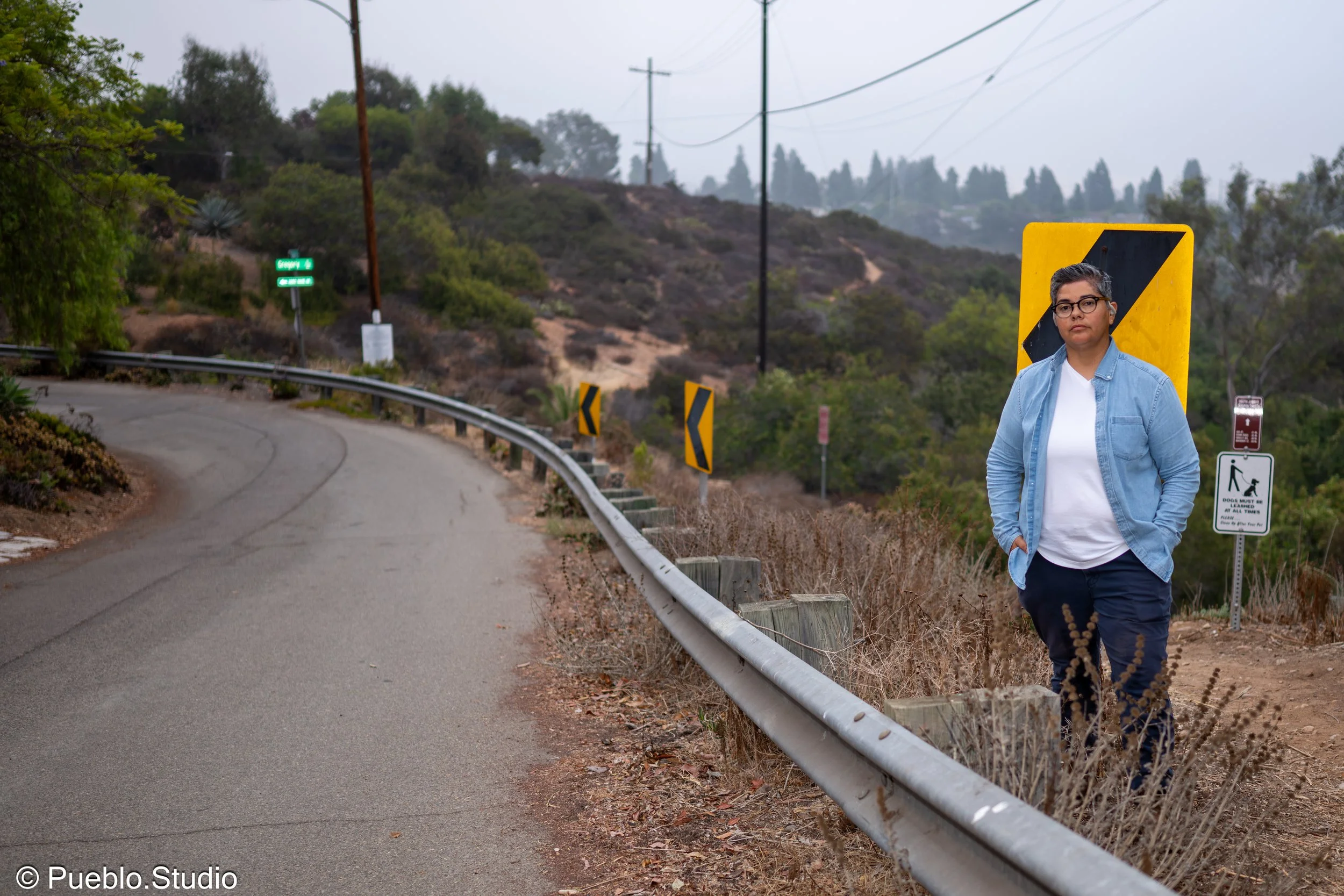
Shalem Aboody-López (they/them) | AICP, MA, MCRP
Cultural Strategist, Community Planner, and Artist
Shalem Aboody-López is a Cultural Strategist, Community Planner, and Artist working at the intersection of community power-building, liberatory storytelling, and transformative public policy and planning. With over two decades of experience, they facilitate participatory planning and narrative-shift processes centering the visions and lived experiences of historically marginalized communities, particularly Queer, Trans, Black, Indigenous, and people of color. As founder of Pueblo Studio, Shalem integrates trauma-informed, consent-based, art-rooted practices to cultivate belonging and challenge dominant narratives that lead to harm.
A nationally recognized planner and justice-centered facilitator, Shalem has shaped equitable and just environmental, transportation, and land-use planning across California and the Pacific Northwest. Their contributions have been honored with numerous awards for innovation, community engagement, and equity, including recognition from the American Planning Association and the California Public Information Officials. Shalem is also a committed educator with nearly two decades of teaching experience at institutions including San Diego State University, Antioch University, Pitzer College, Cal Poly Pomona, and Imperial Valley College. Their teaching—rooted in justice, repair, and community wisdom—spans environmental justice, urban planning history and theory, regenerative infrastructure, democratizing community planning, and urban ecology.
Shalem’s practice is shaped not only by formal education— a certified planner with a Master of Community and Regional Planning Program from the University of Oregon, an MA in Political Science from CSU Long Beach, and a BA in History and Political Science —but also by their embodied experience as a queer, nonbinary, Jewish, Xicanx person who grew up in a community impacted by environmental racism. Across all their roles, Shalem centers community voices and cultivates practices oriented toward collective liberation, reciprocity, and a future in which everyone belongs and thrives.